> For the complete documentation index, see [llms.txt](https://docs.paragontruss.com/llms.txt). Markdown versions of documentation pages are available by appending `.md` to page URLs; this page is available as [Markdown](https://docs.paragontruss.com/design/how-to/profile-truss/gusset.md).
# Create and Delete Gussets
## Creating a New Gusset
### Step 1 - Start Brace Insertion
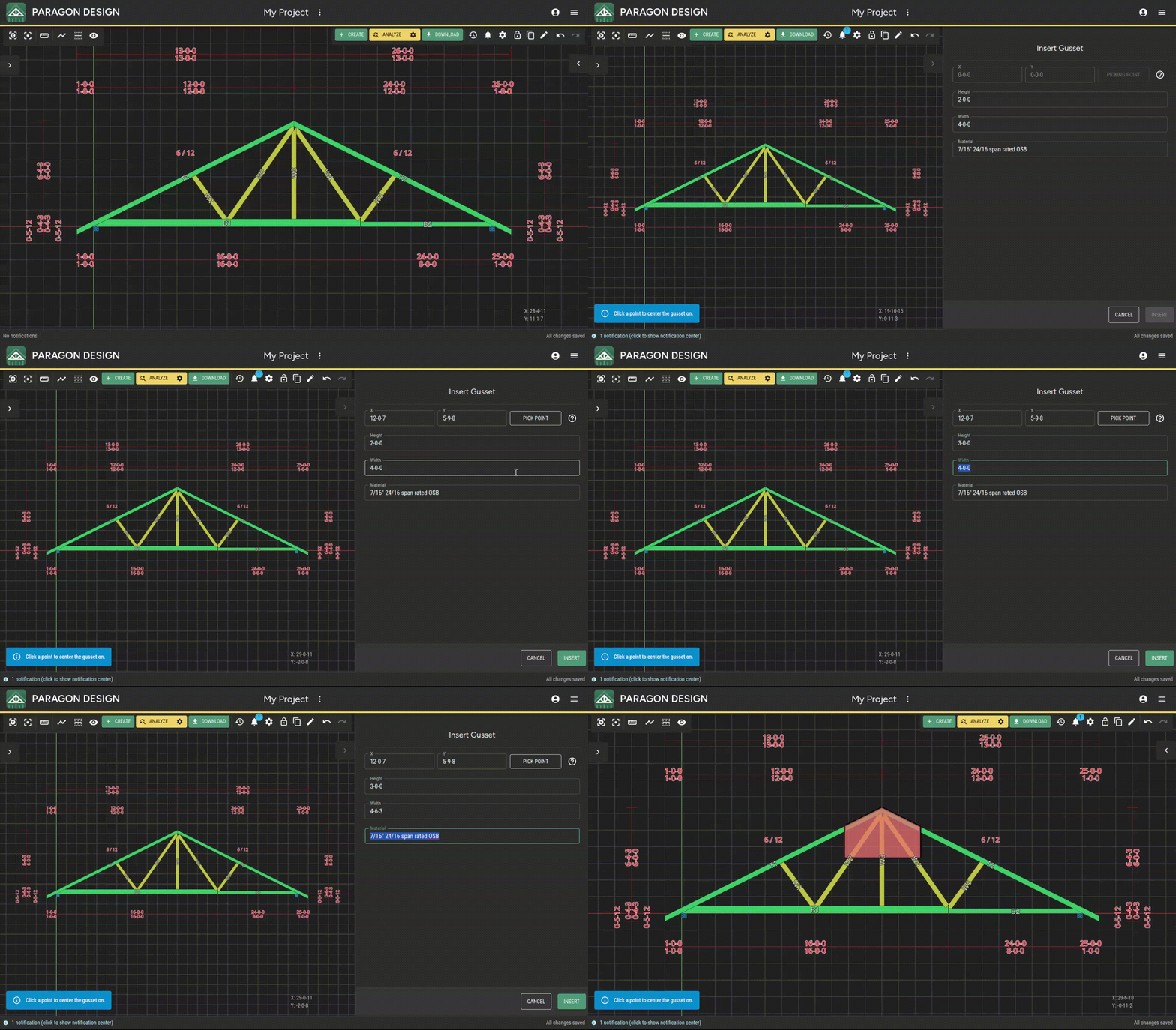
Begin insertion by clicking the `+ Create` button, right-clicking in empty space, or using the `Ctrl + Q`keyboard shortcut and selecting Gusset
{% hint style="success" %}
Tip
You can use the keyboard shortcut `Ctrl + Q + G` to begin inserting a gusset.
{% endhint %}
### Step 2 - Place the Gusset
Place the brace by choosing a point on a member where you would like to center the gusset. You can also modify the height and width of the Gusset, as well as enter notes about the material being used.
{% hint style="info" %}
Note
The generated gusset will be aligned with the closest perimeter edge of the truss and cut against other perimeter edges.
{% endhint %}
{% hint style="info" %}
Note
Once the gusset has been placed you can no longer adjust height/width, however you can modify the Material field which simply serves as a label/note field.
{% endhint %}
## Deleting a Gusset
### Step 1 - Select the Gusset
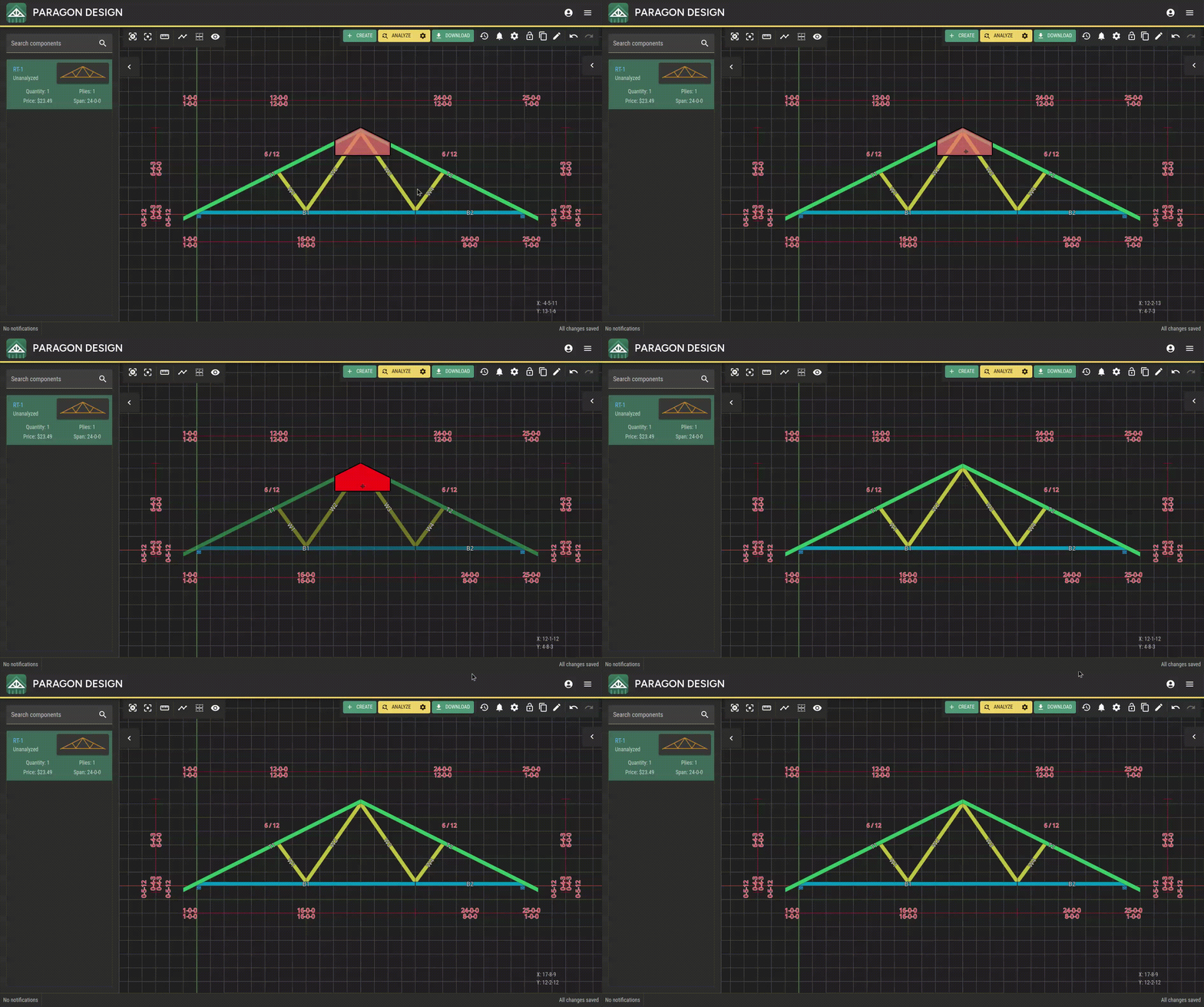
Select the gusset by clicking on it in the scene. Alternatively, you can use the `Right Sidebar` to select a brace.
### Step 2 - Delete the Gusset
Once selected, you can simply hit the `Delete` key.
{% hint style="success" %}
Tip
The gusset will change from a light background to a darker background when selected.
{% endhint %}
---
# Agent Instructions
This documentation is published with GitBook. GitBook is the documentation platform designed so that both humans and AI agents can read, navigate, and reason over technical content effectively. Learn more at gitbook.com.
## Querying This Documentation
If you need additional information that is not directly available in this page, you can query the documentation dynamically by asking a question.
Perform an HTTP GET request on the current page URL with the `ask` query parameter, and the optional `goal` query parameter:
```
GET https://docs.paragontruss.com/design/how-to/profile-truss/gusset.md?ask=&goal=
```
`ask` is the immediate question: it should be specific, self-contained, and written in natural language.
`goal` is optional and describes the broader end goal you are ultimately trying to accomplish on behalf of the user. GitBook uses it to tailor the answer towards what is most useful for that goal.
The response will contain a direct answer to the question and relevant excerpts and sources from the documentation.
Use this mechanism when the answer is not explicitly present in the current page, you need clarification or additional context, or you want to retrieve related documentation sections.